
Ancestors Under the Bed
Walking into the future, while looking back at the past...
Here we are at the beginning of a new year, the start of something fresh, with hopes that this one will be easier than the last. While I recognize the appeal of using this season for looking and planning ahead, I start this year by looking back…
This tale begins with a conversation. My friend and I were discussing old cameras we used in the past, but had long since forgotten. He sent me a picture of an old Kodak Brownie, basically a glorified pinhole camera, that he had wrestled with in his youth. This sparked a memory of a couple ancient camera cases I had grabbed when we were clearing out the family farm. After more than 100 years in the family, attempts to hold onto property that no longer paid for itself through agriculture, had eventually run its course. We had succumbed to the cost of upkeep and taxes, and the day had come to gather all the sentimentality we could shove into a moving truck.
While I primarily focused on grabbing knickknacks that I had played with as a child, I also gravitated toward a few items that I’d never seen before. Hidden on the 2nd floor of a barn were a couple camera cases that piqued my interest. I don’t recall looking inside the cases at the time, although to be fair, the entire affair is a blur. But the discussion of antique cameras prompted me to go digging under the bed, where some of the items had been stored, untouched for two decades.
Out came a pair of rigid leather cases. One looked as if it was entirely untouched by time, and I imagined it looked just like this when my grandparents brought it home from the camera store. The other looked just as you’d expect after spending untold ages in a barn. At the time, I had done my best to remove the pigeon shit and mold from the second one, but the aftermath was still conspicuous. The sound of glass rattling around inside now reminded me why I had not investigated further. Best to start with the nice case…
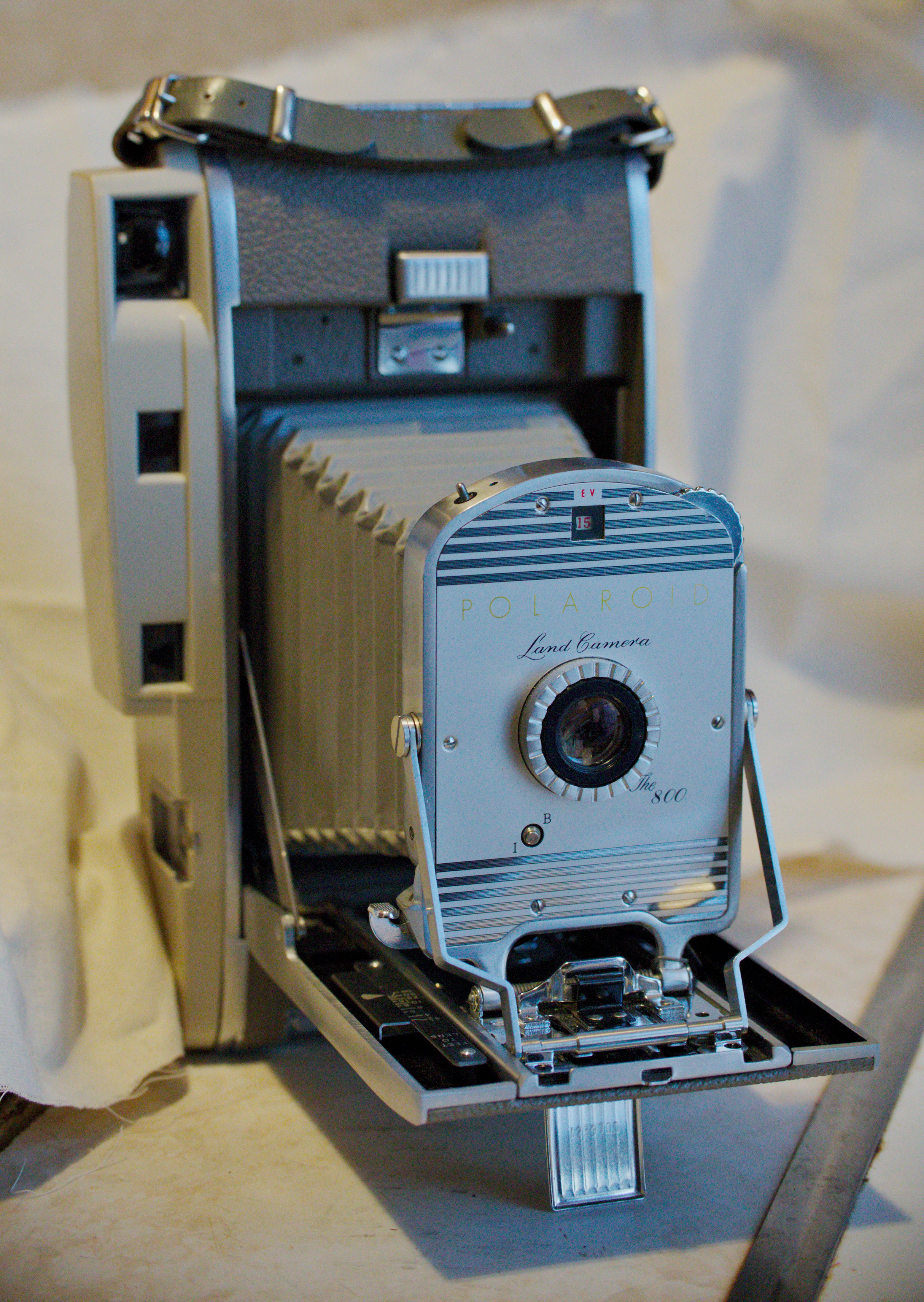
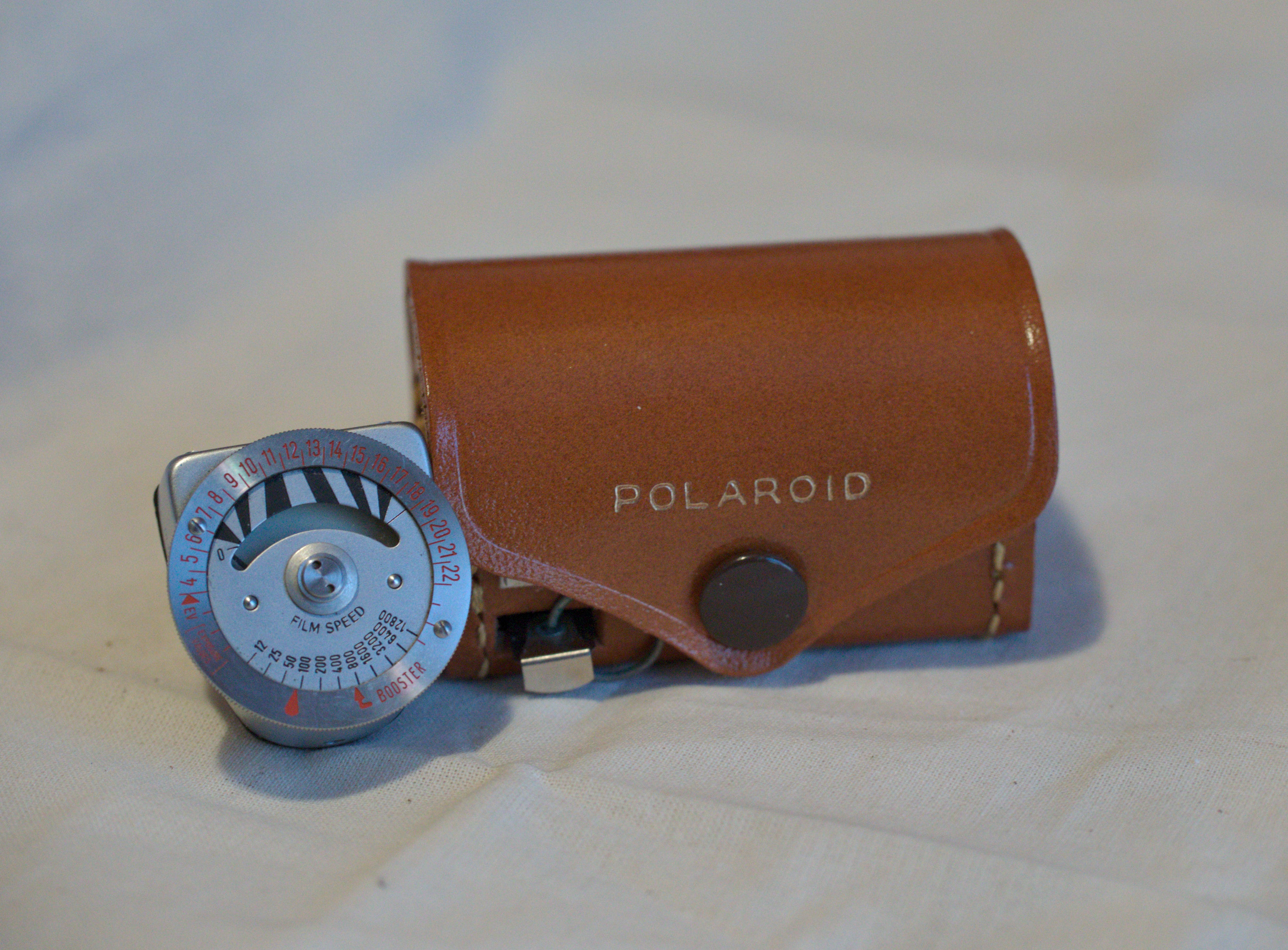
The pale, tan leather case was immaculate, and after triggering the latch, I was greeted with an equally pristine red velvet, corduroy interior. This thing looked as if it had been stored in an atmospheric vault, as clean as the day it was purchased. Inside were several small pouches meant to hold various accessories, including a light meter, filters and close-up lens attachment. Each pouch was labeled with embossed gold lettering, just to help keep you organized. The largest compartment held the crown jewel, which turned out to be a silver/gray Polaroid Land camera, with the ostentatious title of “The 800.” The camera and case gave the impression that once upon a time, this was the Cadillac of instant cameras and upon closer inspection, the camera proved to operate as smoothly as it looked. A quick search produced the sad fact that the roll film once used for this camera was no longer made, Polaroid ceasing production in 1992. A disappointment for sure - because the camera appeared brand new, and I was convinced it had never been used!
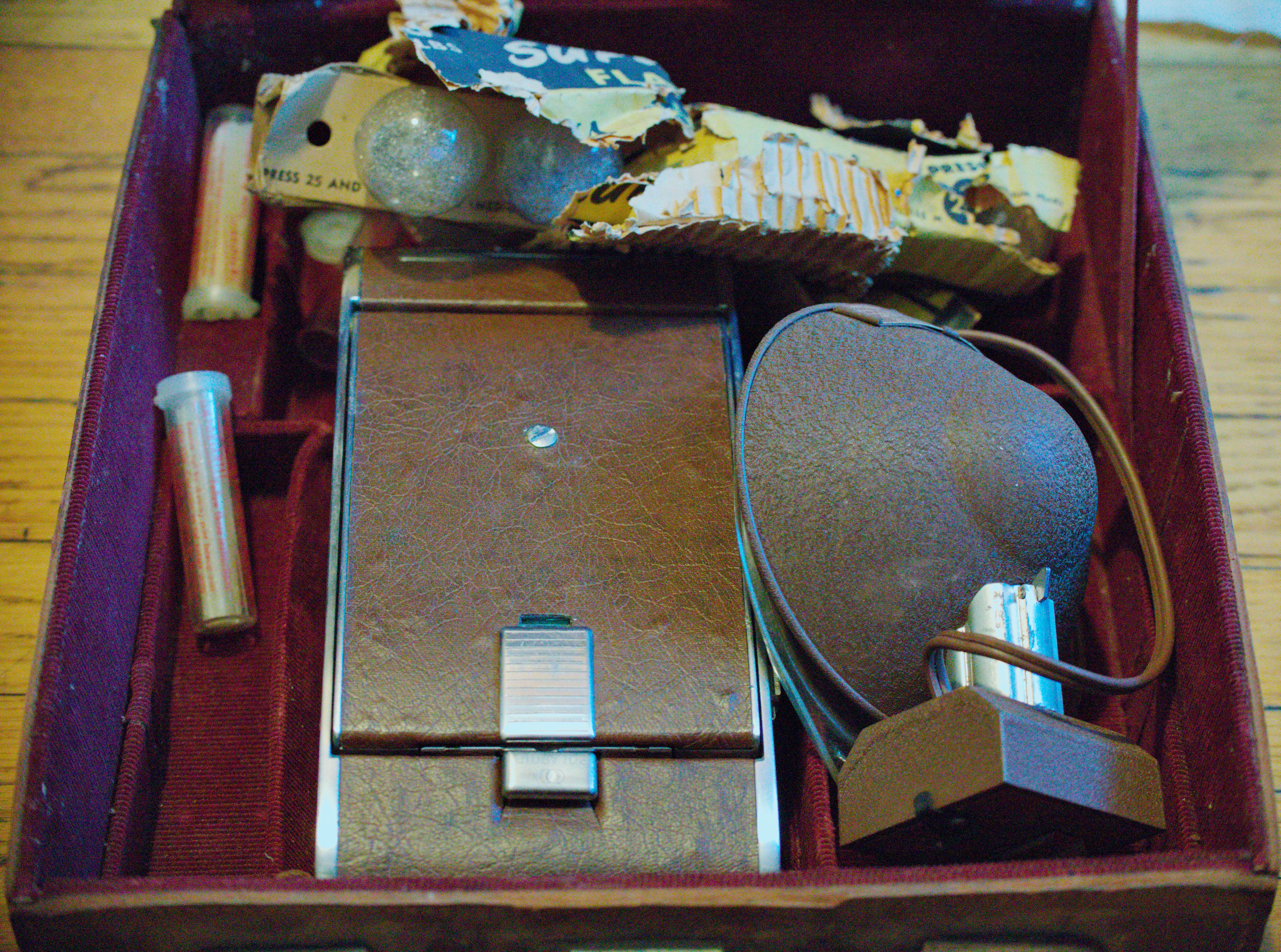
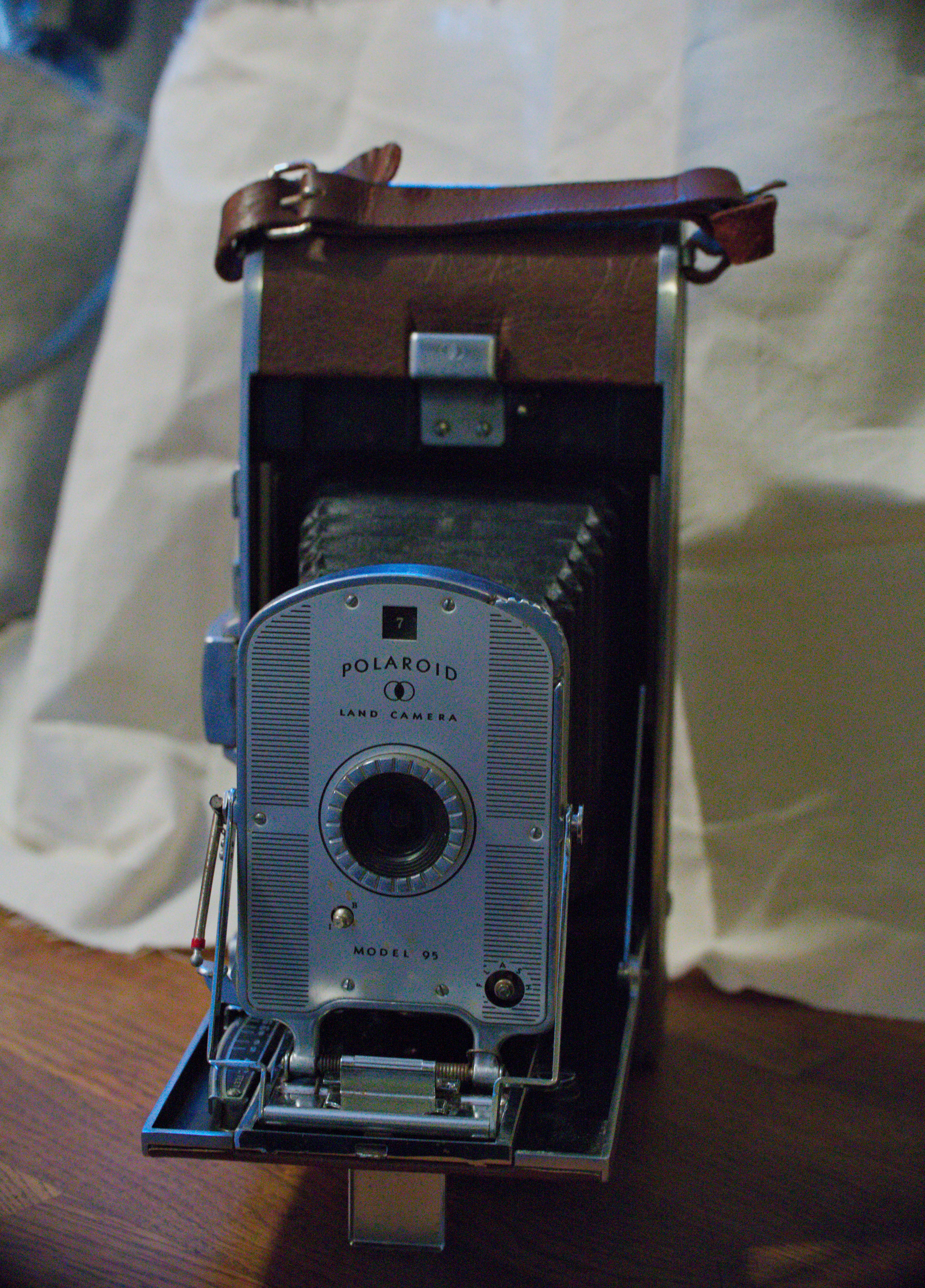
Next up was the old, ratty case. I took it over to the trash can, expecting shards of glass to spring forth the minute I popped the lid. This case was not nearly as fancy, and I wasn’t sure what lie beneath… Once opened, the case included slightly less plush, but no less corduroy pouches, with multiple broken flash bulbs sprinkled throughout. The original flash unit was there, and despite most of the bulbs being broken, there were a few healthy ones in an old paper container. The camera itself, turned out to be a Model 95, the very first instant film camera. The faux-leather cover was peeling from age, but doing its best to hide the corroded metal bits. I dumped the broken glass in the bin, and vacuumed out the remains. Hidden inside were a few old photos, and a small newspaper clipping of an obituary for someone I didn’t recognize. Weird.
This camera needed some help. The rear of the camera was askew, and the hasp no longer held the back light tight against the body. The front, which should easily allow the lens and bellows to pop out, was stuck. So I grabbed my cleaning supplies and repair tools and got to work. Didn’t take long to get the rails cleaned, and now the front standard rolled smoothly to its correct position. Shockingly, even after all these years of abandonment and abuse, the bellows didn’t seem to be damaged. I turned my attention to the rear of the camera, and this is when things got interesting…
I had no experience with this type of instant camera, so I was unaware of how instant roll film worked. There appeared to be a piece of paper stuck in the slot where the photograph should exit. I pulled on it, and a frail and ancient piece of roll film emerged. This thing still had film in it! I did a little research, and found that both these cameras used Type 40 series roll film. This was the first ever instant film, invented in 1948, and consisted of two rolls (negative and positive) that worked together to create the image. All Polaroid cameras used this roll film until 1963, when they eventually switched to pack film. It wasn’t until 1972 that they released the “integral” film that we know today, which ejects and develops in the light.
When I finally opened the rear of the camera, the remains of a roll was inside. It took me a second to focus on what I was looking at - but sitting there in the back of the camera was an exposed frame. Time had deteriorated the film, and the image looked to be lost to years of neglect. It looked somewhat like a negative, most likely a photo that had been exposed and then abandoned before removing it before completing the instant development. The closer I studied the picture, the more I was convinced that it might be my grandfather who had, along with my grandmother, died in a car accident when I was only 10 years old.
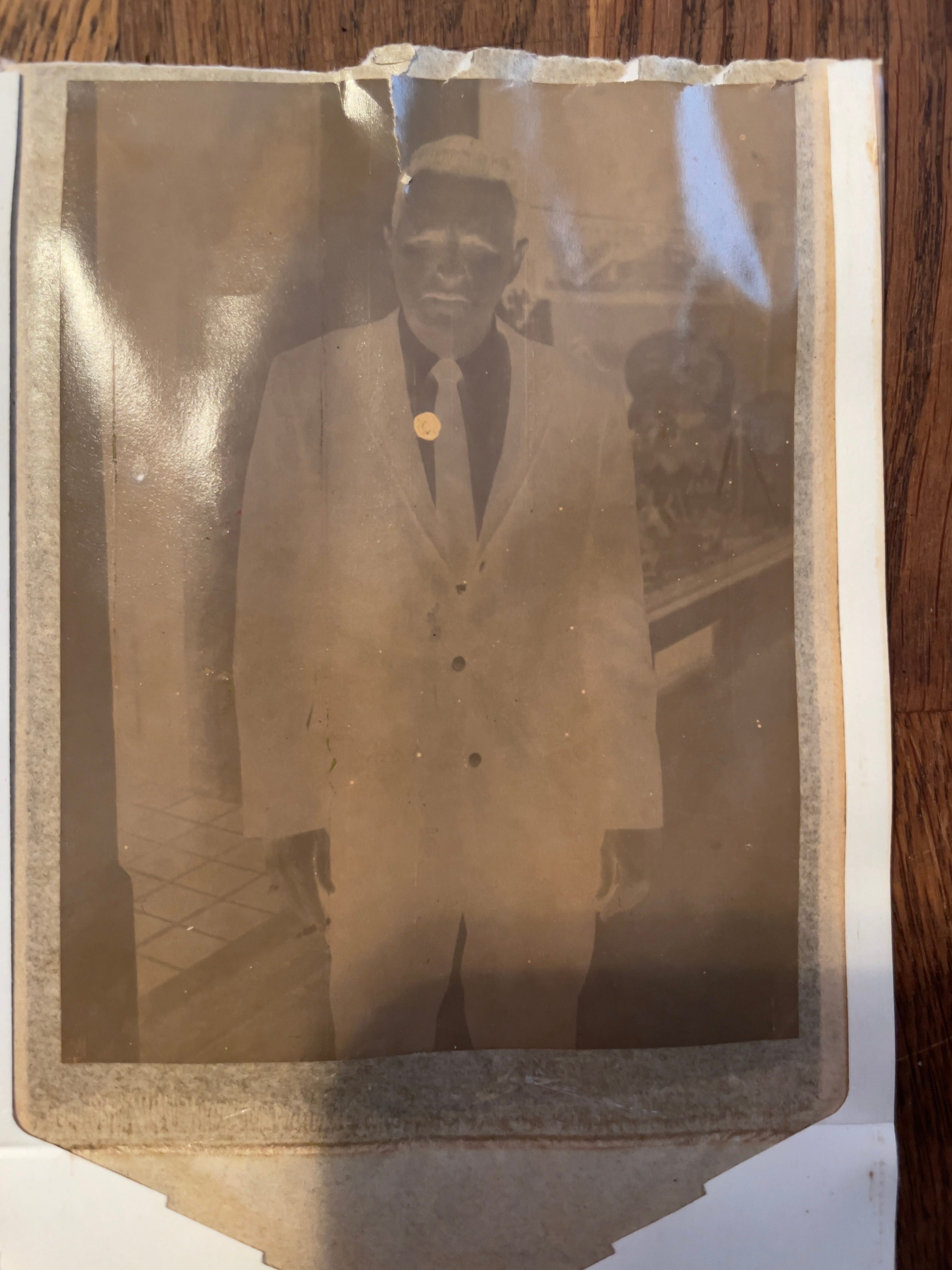
I removed the photo and just stared at it for a while. It dawned on me that I might be able to turn it into a positive and pull a bit of detail out of the film, using the same inversion program I use for my current negatives. It was so crinkled, warped and odd sized, it wouldn’t work in my negative carriers. So I simply laid it on the table and took a quick photo of it with my phone. After importing it into Darktable, I used the Negadoctor module to invert it, and I was gobsmacked. Staring back at me from the screen was my grandfather, dressed sharply in a dark suit, cigarette in hand, with jet black hair. This last point was the most startling - because in all my faint memories, I only remember him looking like a a typical, elderly gentleman, frail and with telltale gray hair. In contrast, this shot showed him in his youth, staring directly into the lens, looking confident and ready to tackle the world…
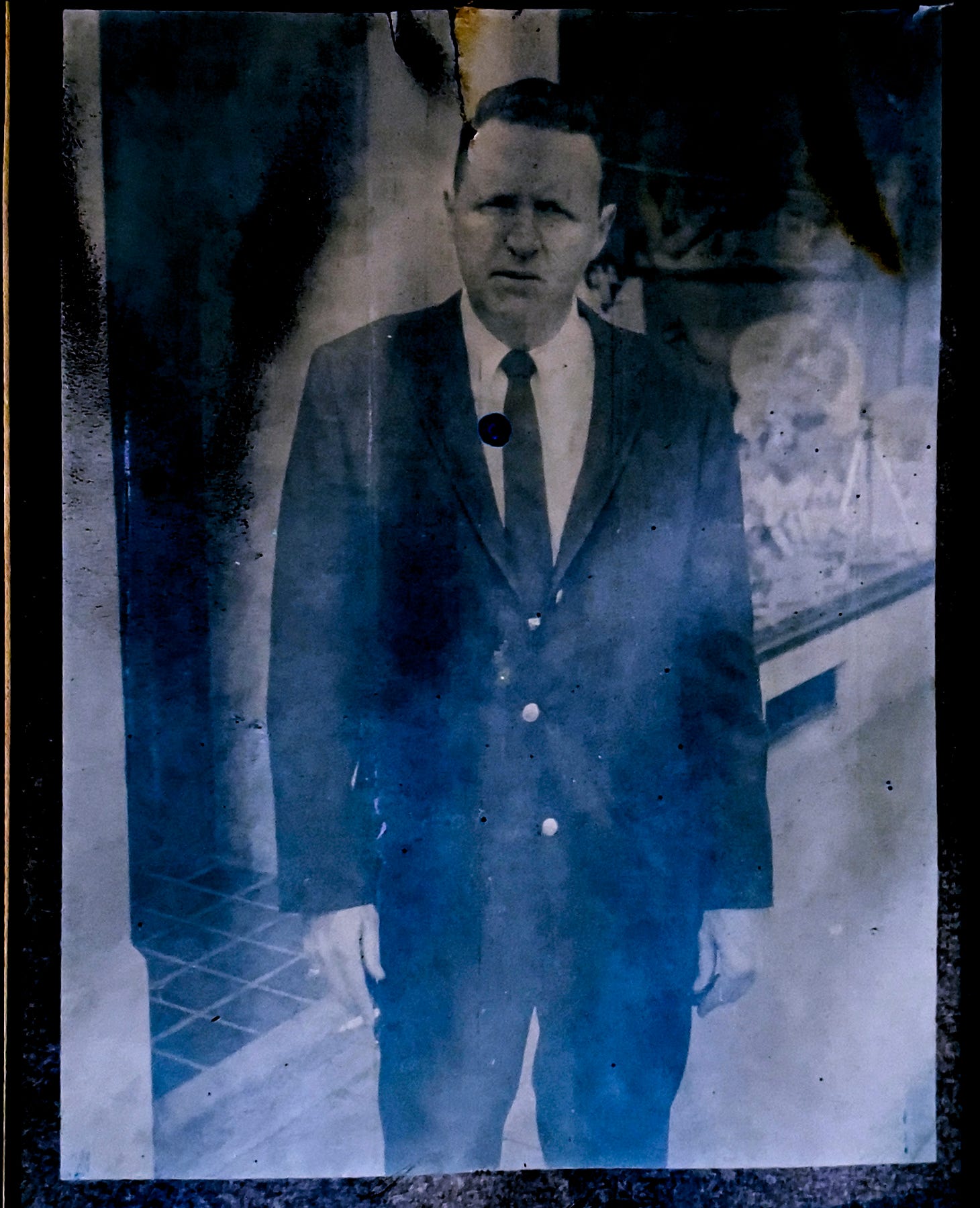
Sharing photos with family members has always been fun and a great bonding experience. But being able to recover a photo like this, lost for so many years, first in a barn and then under a bed - was more rewarding than I could have expected. The thrill my family had seeing my grandfather, gone nearly 50 years now, produced intimate memories that only photography can provide.
I scoured the web for information regarding what I might be able to do with these cameras. Despite the roll film being discontinued, the inventive photography community has come up with some options. With some 3D printing and modifications to the camera bodies, there is the possibility to use either sheet film (4x5) or 120 roll film in these old beauties. I’m flirting with converting the Model 95, since it seems a shame to disfigure a pristine “The 800.” Time will tell if I can breathe new life into it.
So there you have it - a beginning for the new year, walking into the future while looking back at the past…
Incredible story. The part about inverting that deterioraed film frame with Negadoctor and seeing your grandfather in his youth absolutely gave me chills. I had a similar experiance with old negatives from my grandma's attic, though nothing as dramatic as finding a forgotten frame still in the camra. The fact that vintage Polaroids can be modded for 120 film keeps analog photography alive in unexpected ways.